Welcome to a journey through the fascinating world of Ayurveda, where ancient wisdom meets modern wellness! Have you ever wondered why some people seem full of energy while others are calm and collected? Or why certain foods make you feel invigorated while others leave you sluggish? The secret lies in the three doshas: Vata, Pitta, and Kapha. These unique energies shape not only our physical health but also our emotional well-being and personality traits. In this blog post, we’ll dive deep into each dosha—unpacking their characteristics, imbalances, and how they influence your daily life. Whether you’re looking to harmonize your body or simply curious about Ayurvedic principles, understanding these elemental forces can lead to profound insights into yourself and those around you. So grab a cup of herbal tea and get ready to explore the vibrant tapestry of Vata, Pitta, and Kapha like never before!
Introduction to Ayurveda and Doshas
The Indian ancient medicine system, Ayurveda is a treasure trove of wisdom to all people who want to have balance and harmony in their lives. This holistic form relies on the three doshas: Vata, Pitta and Kapha. Doshas possess their particular features and control different aspects of our physical and mental health. Knowing your dosha will open the secrets to your health, your character traits and even your emotional behaviors.
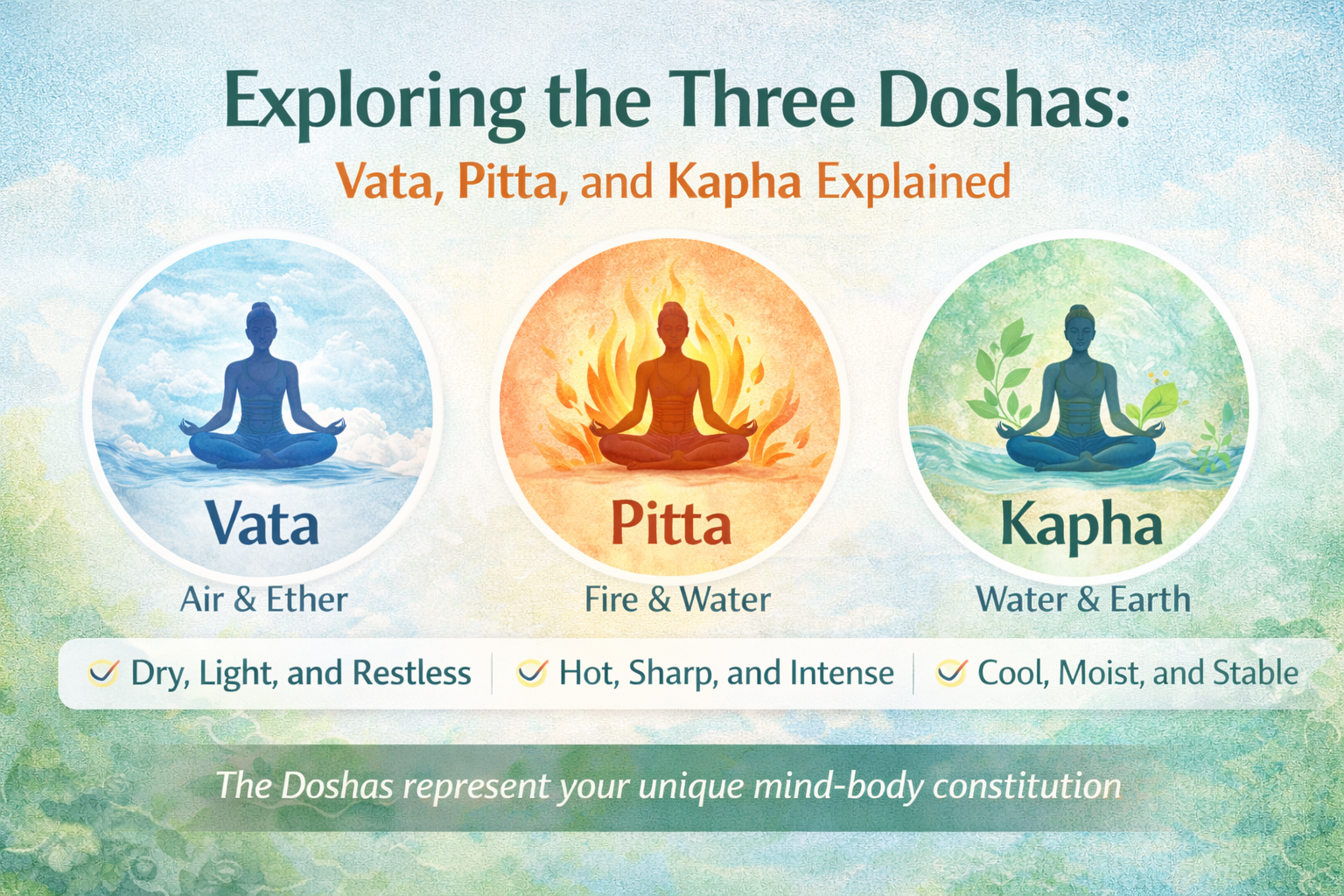
Imagine you are tapping into an ancient philosophy that is what you are at your core. This discussion will take you through the features of each dosha at the same time illuminating on how the doshas interrelate in us. Vata, Pitta, and Kapha, the forces of energy or fire, nurture, and rest, respectively, do not only determine the way we look but also the way we live.
Are you willing to take a trip of self discovery? We are going to explore the world of Ayurveda further, where we will be unravelling secrets of these potent doshas!
Visit us: Best Yoga School in Rishikesh
Understanding the Concept of Prakriti
One of the Ayurveda concepts is prakriti. It is the individual makeup, the balance of three doshas Vata, Pitta, and Kapha.
Individuals possess unique Prakriti that is dictated at birth. This very nature determines the physical qualities, moods, and general welfare.
Knowing your Prakriti will enable you to make a wise lifestyle decision. It determines what you eat, whether you exercise or not, and so on, which are your daily habits. As an example, a person with a dominant Vata can require foods grounding him or her to balance his or her airy nature.
Besides, these doshas can change the way they appear in you based on changes in life events. The awareness of your starting state gives you the power to pursue harmony with the conditions changing with time.
This wisdom of the ancient past can be learned to better know yourself and grow personally during the wellness journey. The study of Prakriti provides the avenues to the holistic health respecting individuality.
Vata Dosha: Characteristics, Imbalances, and Balancing Practices
Vata dosha is characterized by qualities of air and space. Those with a dominant Vata tend to be creative, energetic, and quick-thinking. They often thrive on change and new experiences.
However, when Vata becomes imbalanced, it can lead to anxiety, restlessness, or digestive issues. Physical signs of imbalance may include dry skin, insomnia, or irregular appetite.
Balancing practices for Vata focus on grounding energy. Incorporating warm foods like soups and stews helps soothe the digestive system. Regular routines also aid stability; aim for consistent meal times and sleep schedules.
Gentle yoga or meditation can help calm an overactive mind. Additionally, using oils in self-massage promotes moisture in both body and spirit—helping restore harmony within the Vata dosha landscape.
Pitta Dosha: Characteristics, Imbalances, and Balancing Practices
Pitta Dosha has an element of fire and water. It is correlated with change, metabolism and energy. Individuals with intense Pitta are intended to have certain characteristics such as ambition, brilliance and determination. They are competitive and at times are overwhelmed with their strength.
Under Pitta imbalances, the person might have irritability/or overheating of the body. The symptoms include inflammation, acidity or skin rashes. Stress can be the result of this hot-tempered nature unless it is handled.
In order to balance Pitta Dosha, it is imperative to include practices which are relaxing. Foods like cucumbers and melons are cooled in order to alleviate excess heat. It is also important to remain hydrated, herbal teas that contain peppermint or chamomile are also a good option.
Meditative practices such as yoga and meditation can help relax a stressed mind as well as bring inner peace, which is extremely important to those who are controlled by the aggressive power of this dosha.
Kapha Dosha: Characteristics, Imbalances, and Balancing Practices
Kapha dosha is a combination of earth and water. People who are powerful in this energy will have a robust body structure, a relaxed personality that conveys a warm sense of motherhood.
Some of the traits are resilience, patience and loyalty. But when there is an imbalance they might feel lethargic or they can easily gain weight. There is also a possibility of emotional instability that will result in feelings of attachment or stagnation.
Life style changes are necessary to create equilibrium in Kapha dosha. Exercise helps increase the strength of energy and refreshes the mind. It is better to eat warm and spicy dishes which will help to activate digestion and overcome heaviness.
The use of such practices as yoga promotes flexibility and vitality. Ginger or turmeric infused herbal teas are warming and they boost your mood, as well as well being. Making fun out of diverse experiences will assist in breaking the cycle of stagnation or boredom.
calm an overactive mind. Also, oils in self-massage encourage hydration of the body and the spirit – to help reestablish balance in the Vata dosha terrain.
How to Determine Your Dominant Dosha?
The process of identifying your prevailing dosha is a potentially informative experience of learning more about yourself. Begin by seeing what you see physically. Vata people are often thin, Pitta are usually of medium structures and Kapha people are usually sturdy.
Then take into account your emotional inclinations. There is a possibility of Vata individuals being nervous or fidgety, whereas Pitta types are enthusiastic and energetic. When you are more inclined to stability and serenity, you probably will identify with Kapha.
There is also online quizzes which can be taken to determine your doshic balance. These are tools which look at different aspects such as lifestyle choices, food preferences and responses to stress.
Lastly, monitor the changes in your body and mind during different seasons; it may affect which dosha is dominant in certain times of the year. This realization is important to being in harmony with yourself and the surrounding world.
Tips for Maintaining Balance Among the Three Doshas
To achieve the balance between the three doshas, begin by listening to the needs of your body. Hear what it prefers and what it responds to the various foods and activities.
Add a variety of flavors in food, sweet, sour, salty, bitter, pungent and astringent. This makes sure that the doshas do not get overly nourished.
Have normal exercise, of your own constitution. Vata can be introduced to grounding exercises such as yoga; Pitta can be introduced to cool sport in water, whereas Kapha can be introduced to workouts that boost energy.
The mindfulness exercises include the meditation or deep-breathing methods which help minimize the level of stress and balance energies in you.
Make sleep a priority too. Regular exercise promotes health and prevents imbalance.
Finally, dosa-specific herbal teas may become easy companions in this balancing process. Making such little differences will have a significant effect in your life.
More Details: 200 Hour Yoga Teacher Training in Rishikesh
Conclusion: Embracing Your Unique Prakriti
Being your own Prakriti is a process that is self-discovered. The awareness of the three doshas, that is, Vata, Pitta, and Kapha enables you to know your natural nature. Knowing your prevailing dosha, you are able to make lifestyle choices that bring about wellness.
Each individual possesses a combination of these energies. Be happy with this uniqueness because it teaches you the physical well being, the clarity of the mind, and emotional well being. Doshas have their advantages and disadvantages; knowing these will assist in dealing with the day to day activities.
When balancing the doshas is not only about correcting the imbalances as they occur. It is all about developing the practices that respect yourself at your core. It can be as simple as the changes in diet or as serious-focused activities such as yoga and meditation, the slightest change can have the greatest effect.
It is important that you listen to what your body requires. Listen to its signals and observe its rhythms in your quest to have harmony between the three doshas. It is not just an academic practice; it is an invitation to live more the full life deliberately and consciously.
Wellness is a course that is individual. Be yourself, embrace every part of yourself, the dynamic energy of Vata or the passionate nature of Pitta or the stable nature of Kapha, enjoy the way that they are used to create your experience in life.